Bringing Panem to life The Hunger Games on stage
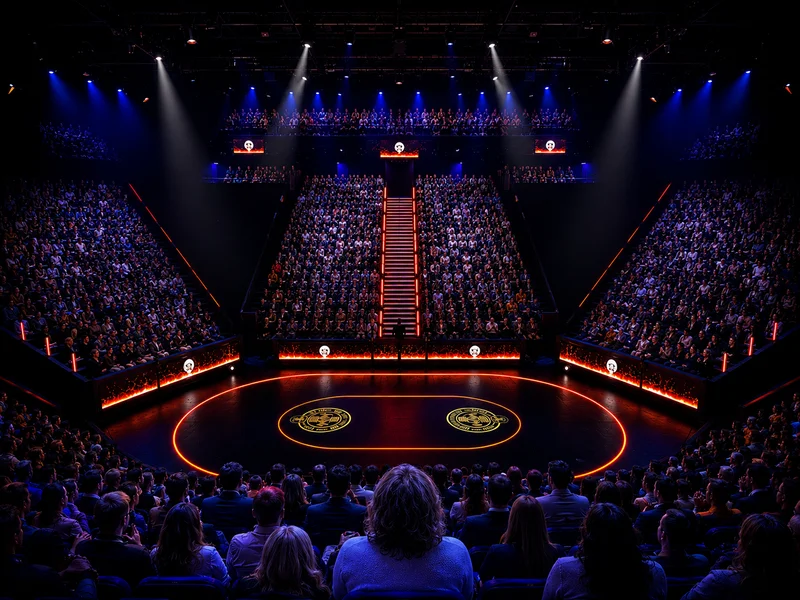
When the production team behind The Hunger Games: Live on Stage needed a mechanical engineering partner to bring Panem to life, they called Iland. We delivered a comprehensive suite of bespoke automation systems — from trap doors to rotating seating banks — to create a show that was as technically gruelling as the fictional games themselves.
Our scope covered everything below the stage deck and around it — all four corners of the theatre, the substage, and every piece of scenery that needed to move, lift, or disappear on cue.
THE MECHANICAL DESIGN
Four integrated automation systems formed the backbone of the stage. Each was engineered to be modular, transport-friendly (max element 2.2m × 3.5m), and capable of integrating with one another for complex multi-system cues.
Scenery Drop & Slide — A split-centre trap door that opens both halves simultaneously, dropping and sliding them under the stage deck for complete clearance. Electric motor driven, with a surrounding truss frame that can hang from steels or sit on uprights. Speed: 1m/s | Travel: 4,200mm | Cycle time: 5s | Platform width: 3,700mm.
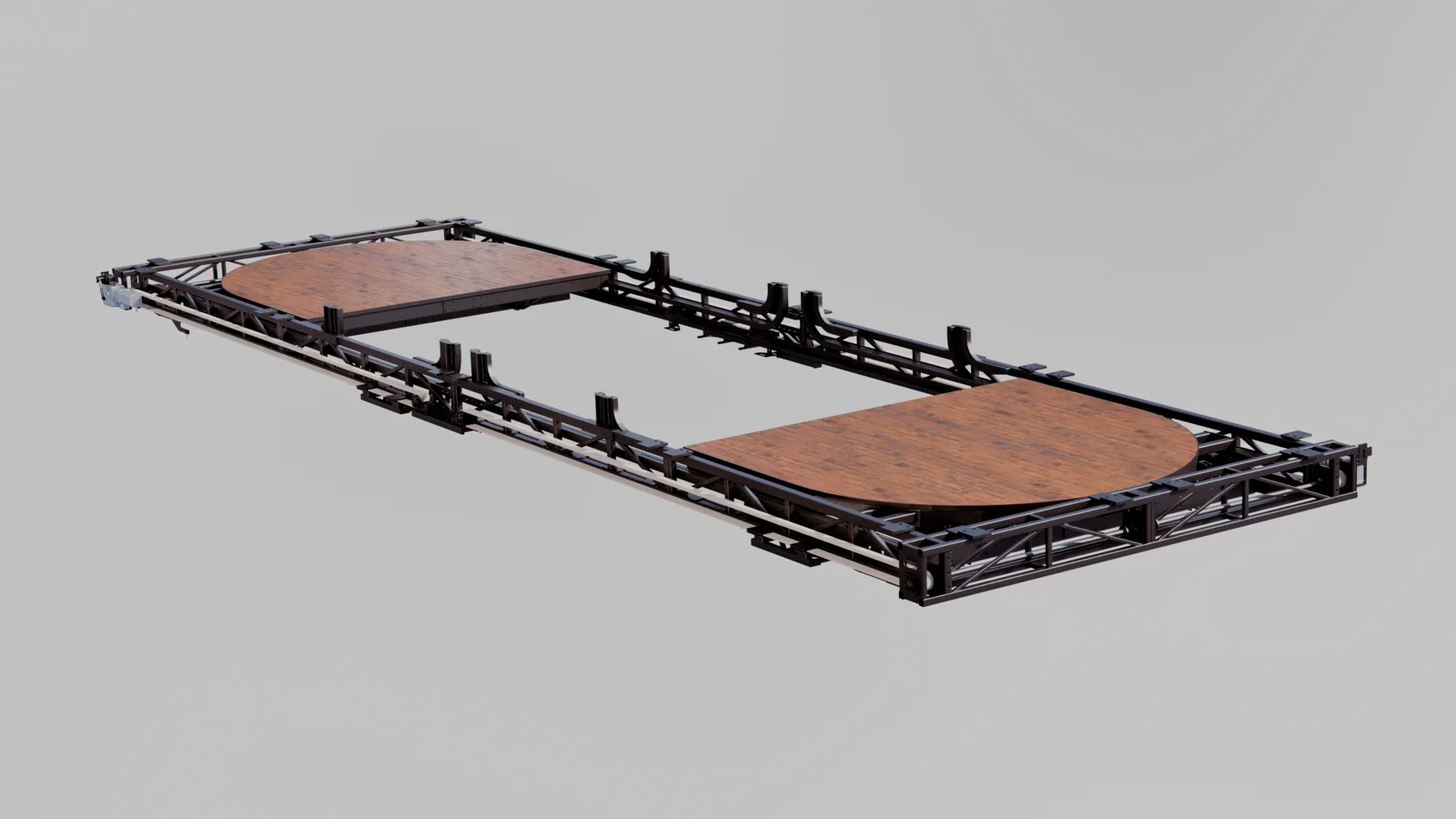
Scenery Lift — Built around Serapid rigid chain actuators with four precision guide channels, this system was designed for the high loads required when raising full scenic elements from substage to performance level. Speed: 0.3m/s | Travel: 3,600mm | Cycle time: 13s | Platform: 3,700 × 6,900mm.
Performer Lift — An electric motor driving the platform via chain and sprocket, with two guide channels for smooth, accurate positioning. Engineered for fast, dramatic performer entrances. Speed: 1m/s | Travel: 3,600mm | Cycle time: 4.5s | Platform: 1,000 × 1,000mm.
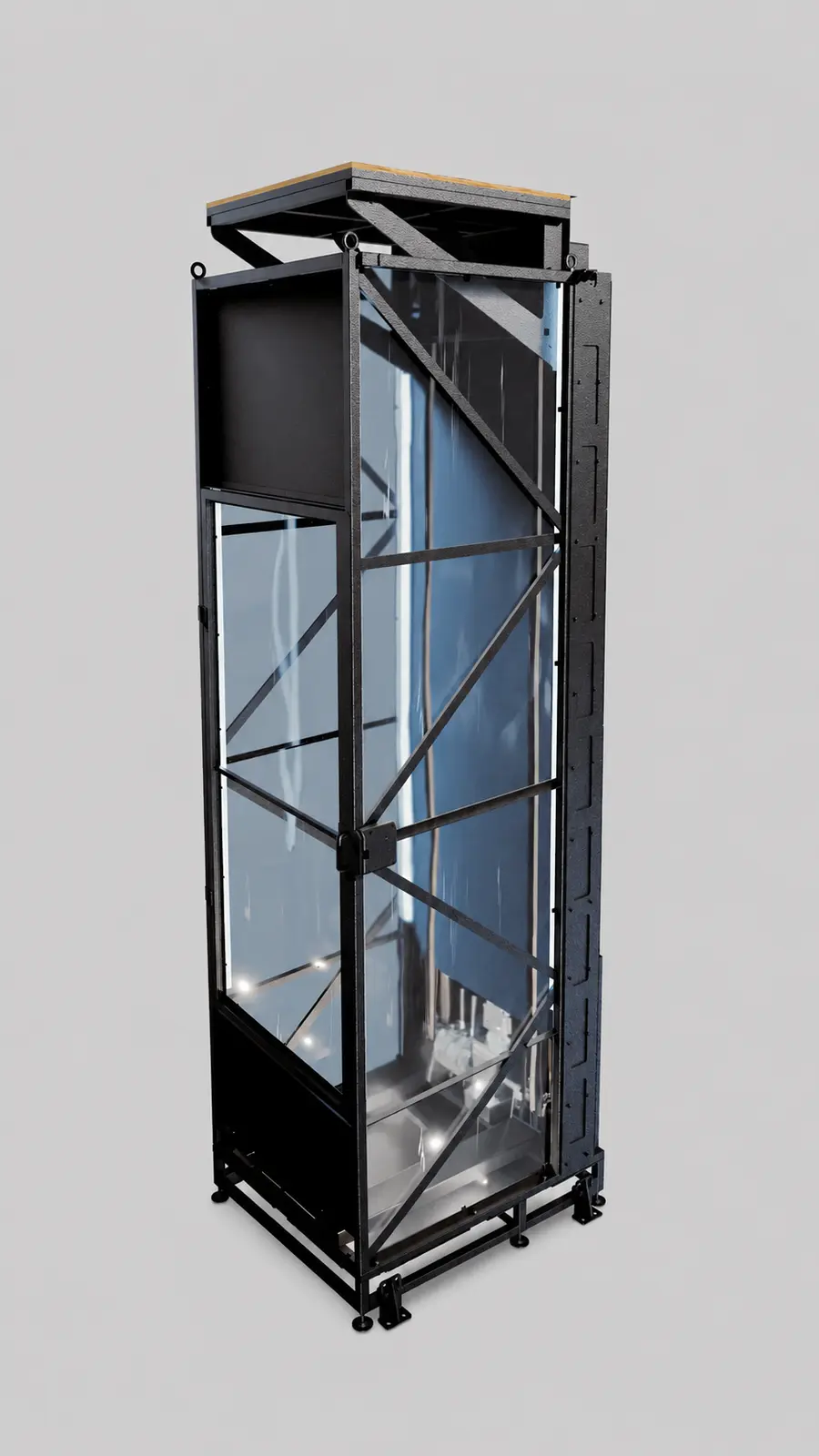
Performer Drop & Slide — The trap door companion to the performer lift, driven by electric motors and belts. The platform stows neatly under the stage when open, and integrates directly with the performer lift for seamless entrance cues. Speed: 1m/s | Travel: 1,248mm | Cycle time: 3.5s | Platform: 1,000 × 1,000mm.
ROTATING SEATING BANKS
The rotating seating banks were arguably the most complex and challenging element of the entire project — large structures carrying 120 audience members each, rotating 46 degrees to reorient the performance space mid-show across all four corners of the theatre simultaneously.
Rotation: 46° | Arc travel: 9.03m | Linear speed (perimeter): 0.25 m/s | Full cycle time: ~40s | Accel/decel ramp: 9s | Rotating mass (per wagon): 26,923kg | Audience capacity: 120 persons | Drive radius: 9m | Drive units per wagon: 2 (friction drive, rubber tread on steel)
Each wagon was driven by two onboard friction drive units, with rubber-treaded wheels running on steel at a 9m radius from the pivot. The drive system had to be carefully engineered around a variable live load — a full house versus a partial audience changes the available downforce significantly, and the friction drive is entirely dependent on that downforce to function. Getting the castor layout right to ensure the correct reaction loads through each drive unit, across all audience configurations, was a significant piece of work.
The total rotating mass per wagon came in at just under 27,000kg — structure, seats, onboard drives, and 120 people — with a total moment of inertia north of 1.4 million kg·m². The Stöber gearboxes and Mayr brakes were critical here, providing the precision motion control and failsafe holding capability that a live, occupied structure demands. A Mayr RSA80 motor brake was specified per drive, with braking forces carefully calculated to avoid overloading the structure during a CAT-0 stop scenario.
Motion was deliberately kept gentle — a 40-second full rotation cycle with 9-second acceleration and deceleration ramps — to minimise any sensation of movement for those on board. Hard stops were ultimately replaced with sprung end stops and ultimate limits, validated through on-site testing.
The result? A system that moved nearly half a tonne of audience through space, silently and seamlessly, eight shows a week — and nobody in those seats had any idea how much engineering was keeping them comfortable.
HOW WE WORKED
Iland Engineering were contracted directly by Smart Axis, the automation specialists behind the show's mechanical systems, with all fabrication carried out in West Yorkshire. But our role went well beyond drawing office work.
On a project of this scale and complexity, Smart Axis needed an engineering partner they could embed into their team — and that's exactly what we became. We represented Smart Axis in engineering meetings, produced and owned the technical documentation packages, and were present on site during installation to ensure everything went in as designed. When challenges arose — and on a project like this, they always do — we were there to solve them in real time rather than from a desk hundreds of miles away.
It's the kind of working relationship we thrive in. Not a supplier handing over drawings and stepping back, but a genuine extension of the project team — sharing the pressure, the problem solving, and ultimately the satisfaction of watching it all come together on opening night.
THE OUTCOME
The Hunger Games: Live on Stage opened to critical acclaim, with every one of Iland Engineering's systems performing flawlessly on opening night and beyond. Lifts hitting their marks, trap doors opening on cue, and 480 audience members rotating in unison without so much as spilling a drink. The Stage magazine praised the technical wizardry of the production — a verdict the Iland team were quietly very pleased with.
Our founder Nick Iland attended the gala opening night to see the fruits of the team's labour in person — and by all accounts celebrated rather too enthusiastically. Given what it took to get there, nobody could blame him.